

Enabling AI for small and medium-sized businesses (SMBs) can be a tricky prospect.
That’s because if workflows aren’t working, you shouldn’t automate what’s broken. Before managed service providers (MSPs) and managed intelligence providers (MIPs) can deliver real outcomes with agentic AI, they need to understand how work actually happens inside their clients’ businesses. That means identifying inefficiencies, mapping workflows and uncovering what we call process debt—the hidden friction slowing everything down. This is where transformation starts. In the Managed Intelligence Provider (MIP) Playbook, we call it the Discover Play: the first step in turning AI from experimentation into operational impact.
For many SMBs, years of inefficiency have embedded themselves into ways of working. All those extraneous, manual steps quietly add up. Eventually, these inefficiencies have turned into roadblocks to innovation. When your clients are hamstrung by inefficiencies that stretch their smaller teams beyond their means, bigger goals remain out of reach.
Transformation happens when these inefficiencies are examined through the lens of intelligence to systematically remove inefficiency and convert to autonomous workflows. Follow this series as we explore the six Plays of AI transformation, starting with Discover.
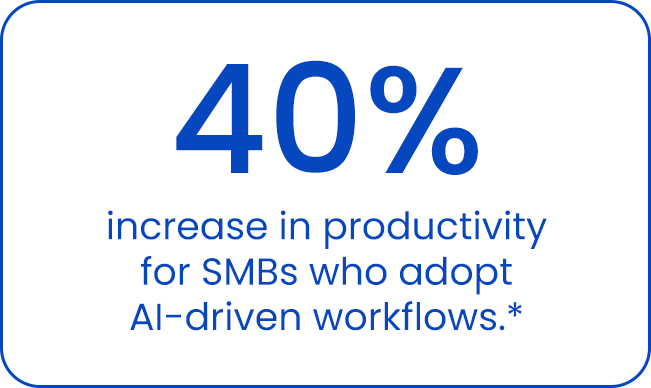
What Is the Discover Phase in AI Transformation?
The Discover phase is the first step in AI transformation in which you assess client workflows, identify inefficiencies (“process debt”) and prioritize high-impact automation opportunities before deploying agentic AI.
Why the Discover Phase Matters
Most SMBs already use AI tools like Microsoft Copilot or Claude. But a few employees inputting prompts here and there doesn’t equate transformation.
Without understanding how work flows across teams, automation efforts tend to:
- Reinforce inefficiencies
- Fragment systems further
- Fail to deliver measurable ROI
Process debt is the root cause of these issues. It’s the accumulation of manual steps, disconnected tools and inefficient workflows that quietly compound. Over time, it has the effect of limiting scalability and slowing growth.
How to Identify AI Opportunities for SMBs
As an MSP or MIP, you can uncover high-value AI opportunities by systematically analyzing how work gets done, where friction exists and which processes are worth automating first.
Your goal shouldn’t be to fully automate everything. Frankly, that’s just not realistic! Instead, your goal should be to identify one high-impact workflow that proves value quickly.
Discover takes part across a five-step process that evaluates scattered tools and gives them a systematic approach — formalizing conversations that may be happening here and there and giving them shape. This approach helps build value and trust over time, delivering results across a roadmap that’s easy to follow. You can also take this system to other clients in a similar boat, giving you a repeatable business model.
Where Does the Discover Play Start?
The Discover Play rewards curiosity. Work doesn’t look the same for every organization. Your role is to audit, ask questions to find the hidden process debt, identify spots where automation could help and find the first outcomes you should target together. By doing this, you’ll further establish yourself as their trusted advisor who can unlock tangible business outcomes from AI.
This process may begin with structured conversations and workshops. These sessions should focus on mapping workflows, clarifying business goals and identifying pain points.
If you want to get fancy about it, bring on the agentic workflows! Use intelligent systems to observe workflows directly and analyze patterns. This can allow you to highlight optimization opportunities in real time — and show, not tell, the positive effects of agentic AI.
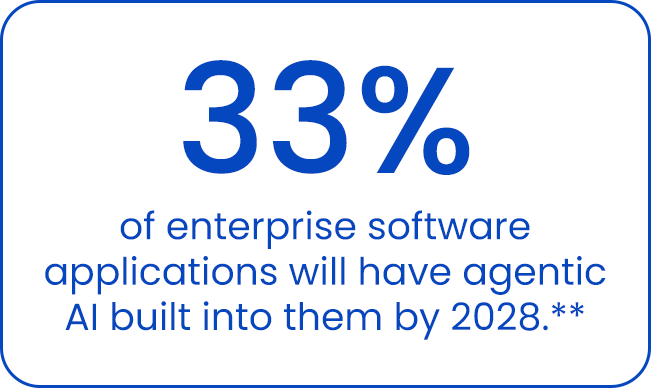
The Five Steps in the Discover Play
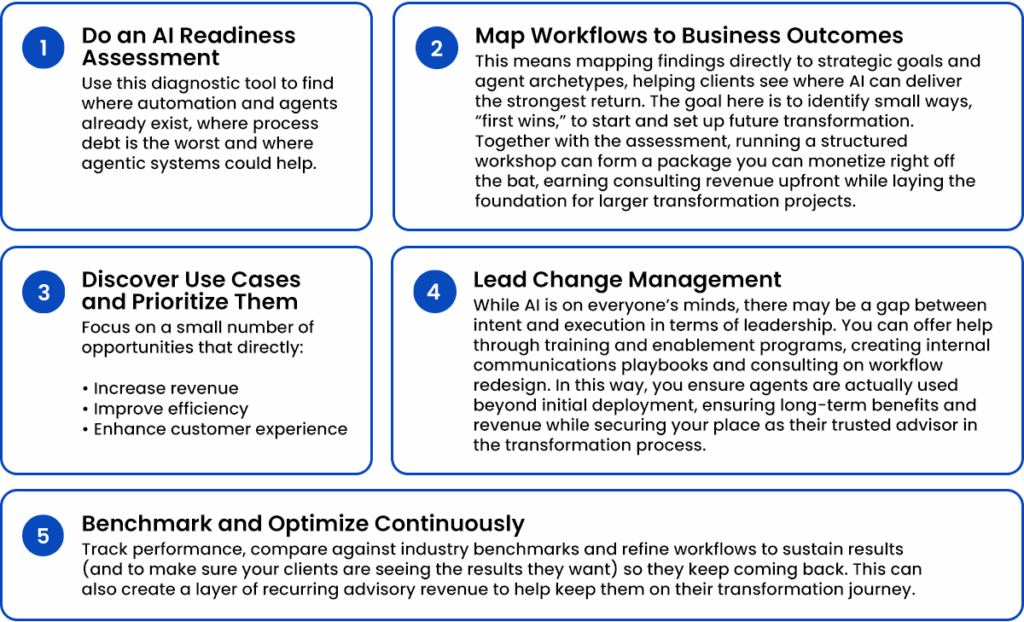
1. Do an AI Readiness Assessment
Use this diagnostic tool to find where automation and agents already exist, where process debt is the worst and where agentic systems could help.
2. Map Workflows to Business Outcomes
This means mapping findings directly to strategic goals and agent archetypes, helping clients see where AI can deliver the strongest return. The goal here is to identify small ways, “first wins,” to start and set up future transformation. Together with the assessment, running a structured workshop can form a package you can monetize right off the bat, earning consulting revenue upfront while laying the foundation for larger transformation projects.
3. Discover Use Cases and Prioritize Them
Focus on a small number of opportunities that directly:
- Increase revenue
- Improve efficiency
- Enhance customer experience
4. Lead Change Management
While AI is on everyone’s minds, there may be a gap between intent and execution in terms of leadership. You can offer help through training and enablement programs, creating internal communications playbooks and consulting on workflow redesign. In this way, you ensure agents are actually used beyond initial deployment, ensuring long-term benefits and revenue while securing your place as their trusted advisor in the transformation process.
5. Benchmark and Optimize Continuously
Track performance, compare against industry benchmarks and refine workflows to sustain results (and to make sure your clients are seeing the results they want) so they keep coming back. This can also create a layer of recurring advisory revenue to help keep them on their transformation journey.
What Are High-Impact AI Use Cases in the Discover Play?
Rather than running a full audit, start with one constrained, high-impact workflow that proves value quickly. This one priority outcome, like speeding up quote‑to‑cash or reducing support resolution time, should deliver quick, measurable business value and build momentum.
Use Case 1: AI Readiness Assessment and Outcome Roadmap
What it is: A structured diagnostic that identifies a single workflow bottleneck and defines a clear, outcome-driven automation opportunity.
How it works:
- Conduct a focused assessment (not a full audit)
- Identify one high-friction workflow (e.g., quote-to-cash, support resolution)
- Map that workflow to a measurable business outcome
- Define a “first win” automation opportunity
What the client gets:
- A clear AI opportunity tied to ROI
- A prioritized roadmap (not a list of ideas)
- Confidence to move forward
How you can monetize this:
- Fixed-fee assessment (fast to sell, low friction)
- Expansion into a pilot project and ongoing transformation retainer
Strategic advantage: You get paid before implementation even begins.
Use Case 2: AI Prioritization Workshop (Fast ROI Activation)
What it is: A structured, time-boxed workshop that evaluates and ranks AI opportunities based on business value, feasibility and risk.
How it works:
- Identify 5–10 potential AI use cases
- Score them against business impact, data readiness and implementation complexity
- Select one “thin-slice” pilot, or a high-impact, tightly scoped process that will deliver immediate measurable ROI
What the client gets:
- A clearly defined pilot project with defined success metrics
- Breaking through analysis paralysis
- Alignment across leadership
How you can monetize this:
- Package as a standardized workshop offering
- Tailor expansion phases that follow the initial pilot
Strategic advantage: You deliver the goods while creating a repeatable SKU.
How Does the Transformation Process Work?
Transformation starts at home! You’ve got to start by adopting a “Customer Zero” mindset and become the first adopter of AI agents. You’ll get direct insight into how long adoption takes, challenges and operational realities. This approach also help builds credibility, since you’re practicing what you preach, and can help you align AI capabilities to real-world business needs.
With your first client, determine whether they’re a process-heavy organization (like manufacturing or retail) that needs full-service delivery, a knowledge-based firm (like a creative agency) that could benefit from guided implementation or in a highly regulated industry (like healthcare) that demands a governance-first design. The latter category works well because many of these industries face labor shortages, and you can tailor agent solutions for higher impact.
An important note: From the first engagement, governance should be built in by design. That means embedding security, compliance and cost controls into every workflow. This helps you build trust and differentiate your offerings from competitors who may strike quickly but treat governance as an afterthought — set your clients (and yourself) up for success by making it a priority.
What’s Next in the AI Transformation Journey?
The Discover Play sets you up for the most exciting Play: Sell. You may be tempted to jump right into selling agentic services right away, but Discover is about doing deliberate prep work, testing ROI, understanding challenges and building credibility, instead of shoehorning agentic services into workflows for clients who may not be ready for them. (And, not for nothing, you may not be ready yourself!)
Take the time to set the stage properly with the Discover play. Sure enough, you’ll be on your way to selling (and re-selling) agentic services that keep your clients happy and hooked.
Get The MIP Playbook to see the whole process, and stay tuned for the next blog: Play 2 Sell.
*Microsoft. “AI and SMBs: An Analysis of Their Adoption and Impact.” Microsoft News Center Canada, 19 Apr. 2024.
**Gartner. “Gartner Predicts Over 40% of Agentic AI Projects Will Be Canceled by End of 2027.” Gartner, June 25, 2025.